
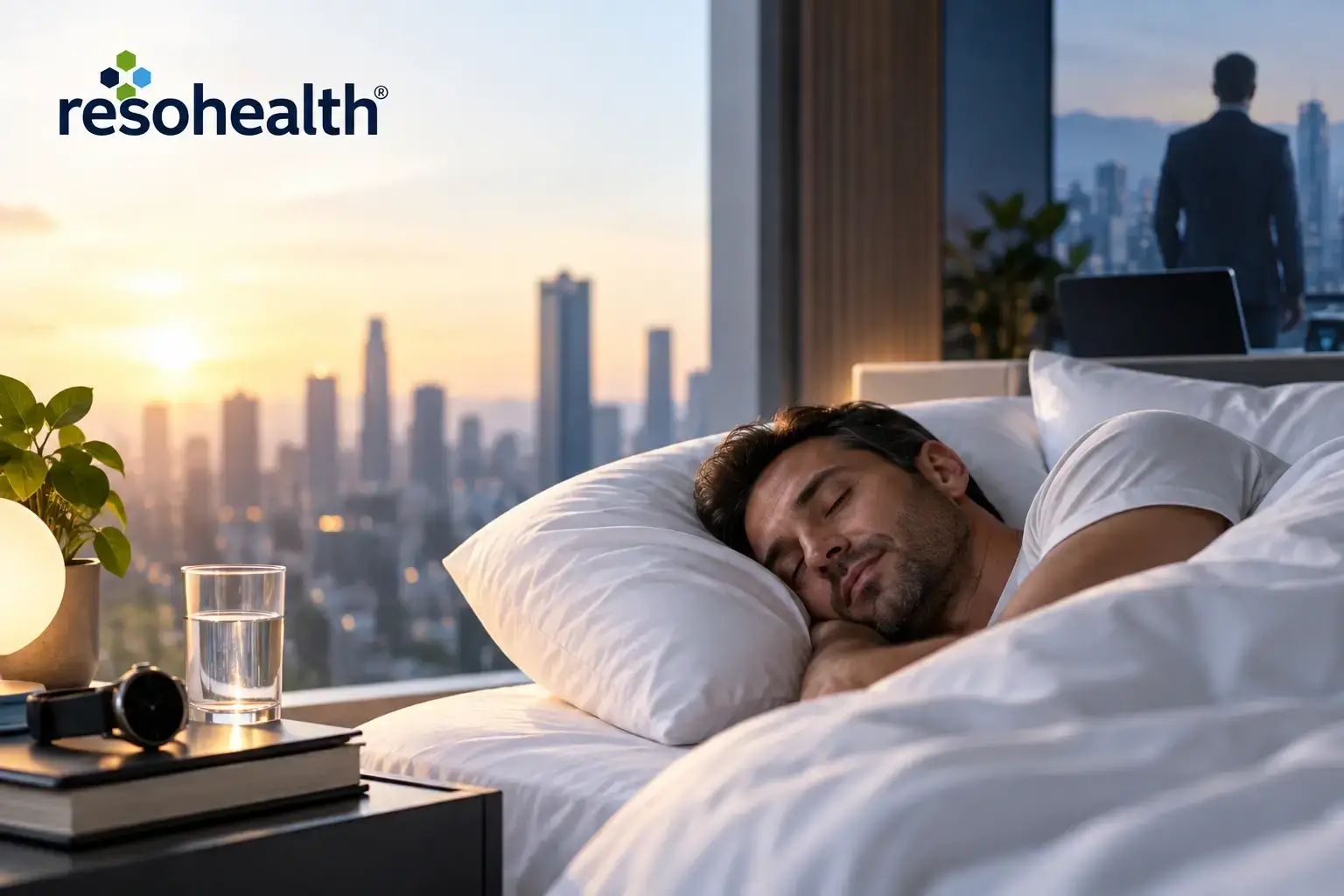

Maintain a consistent sleep – wake cycle is the common advice the top level leaders and CEO’s receive when they go for sleep therapy or counselling when they struggle with proper sleep.
As the CEO’s and other top level officials have extremely high demanding responsibilities on their work. It’s the kind that follows you through the next morning’s board meeting, through the 11 PM call you couldn’t avoid, and into Sunday when you were supposed to switch off but didn’t. Which impacts their performance due to chronic fatigue and exhaustion due to lack of proper sleep.
Most senior leaders know it well. And very few talk about it.
At the top, admitting you’re tired is often perceived as admitting weakness. So instead, you push through. You order another espresso. You white-knuckle the 7 AM presentation. You tell yourself you’ll “catch up on sleep” when the quarter settles down.
The quarter never settles down. And the cognitive debt keeps compounding.
The Real Problem Isn’t How Many Hours You Sleep
Sleep science has been clear on this for over a decade: duration alone does not determine whether you recover. A CEO logging eight hours of fragmented, cortisol-disrupted, pre-dawn-alarm sleep is not getting the same return as someone spending six hours in deep, restorative cycles.
What actually matters is sleep architecture — the sequential movement through light sleep, deep sleep (slow-wave), and REM. Each stage serves a distinct biological function
- Deep sleep: Physical repair, immune modulation, human growth hormone release
- REM sleep: Memory consolidation, emotional regulation, creative problem-solving
- Light sleep transitions: Hormonal recalibration, cellular restoration
When you’re chronically stressed, cortisol suppresses both deep and REM sleep. Your body spends the night in a low-grade physiological alert state — technically asleep, functionally unrestored.
“The morning result? Decision fatigue before 9 AM.”
The C-Suite Sleep Disruptors Nobody Lists in HBR
1. Frequent Air Travel and Circadian Disruption
If you cross two or more time zones three or more times a month, your circadian rhythm is effectively running without an anchor. Jet lag isn’t just feeling groggy — it disrupts melatonin secretion timing, suppresses leptin (appetite regulation), elevates cortisol, and measurably impairs executive function for 24 to 48 hours per crossing.
The physiological recommendation: 1 day of recovery per time zone crossed. That means a Dubai–London–New York week requires nearly a week of circadian recalibration your schedule will never allow.
2. Stress Hormones That Don’t Clock Out
Cortisol follows a natural daily curve — high in the morning to drive alertness, low by evening to allow melatonin production and sleep onset. For executives carrying chronic high-pressure loads, this curve flattens.
Cortisol stays elevated into the evening, blocking melatonin, raising heart rate, and keeping the brain in decision mode long after midnight.
Lying awake mentally rehearsing tomorrow’s investor meeting at 2 AM is not a willpower problem. It’s a hormonal one.
3. The “Loneliness at the Top” Stress Load
Senior leaders frequently carry anxieties they cannot share with their teams, boards, or peers — fear of judgment, the weight of other people’s livelihoods, imposter pressure in new markets.
That private, chronic psychological load activates the same cortisol pathway as a physical threat. It is physiologically indistinguishable from sustained stress.
Unprocessed stress is one of the primary drivers of sleep-onset insomnia in high performers.
Ways to Measuring Sleep Like an Executive — Wearables That Actually Matter
If you’re not measuring, you’re guessing. The wearable market has matured enough to give C-suite leaders genuine sleep data:
The metrics to track as trends:
- HRV (Heart Rate Variability): The single best proxy for nervous system recovery. Low HRV = physiologically stressed, regardless of hours slept.
- Deep sleep percentage: Target 15–20% of total sleep time. Below 10% consistently is a clinical concern.
- Resting heart rate trend: Creeping upward over weeks signals insufficient recovery.
Track trends over 2–4 weeks. One bad night means nothing. A three-week decline in HRV with a rising resting heart rate means your body is accumulating a debt.
How Much Sleep Do Executives Actually Need?
The evidence-based answer: 7 to 9 hours for most adults, with 7.5 hours being a useful target for those with high cognitive demands. Below 6 hours consistently, has impact on the prefrontal cortex function — the area governing judgment, risk assessment, and impulse control — measurably degrades.
Research from Harvard Medical School found that sleep-deprived executives make decisions with the same risk profile as mildly intoxicated individuals. Not occasionally. Consistently.
The Executive Sleep Stack: How Top Leaders Are Actually hacking into good sleep hygiene.
| Intervention | Mechanism | Time Required |
|---|---|---|
| Box / Extended Exhale Breathwork | Activates vagal nerve; drops cortisol in 3–5 min | 3-5 minutes, start with inhale for 4 counts- hold for 4 counts – exhale for 4 counts and repeat. |
| Hyperbaric Oxygen Therapy (HBOT) | Accelerates cellular repair; improves mitochondrial output, also increases oxygen in the cells. | 30,45 or 90 minute session depends on health conditions. |
| Parasympathetic Stretching | Releases postural tension; lowers sympathetic activation | 15 min pre-sleep – relaxes the mind and helps with mobility and reduces stress. |
| Low-Dose Melatonin supplement | Circadian signal recalibration – for those who suffer with lack of sleep or frequent flyers going through various timezones in a week or month. | 60–90 min before target sleep. Consult a doctor for dosage and frequency based on your health condition and lifestyle habits. |
| Infrared Sauna | Heat shock proteins; BDNF release; cortisol reduction | 15-30 min depends on individual health condo |
Breathwork Before Sleep
Box breathing Method – where an individual breath in for 4 counts, then holds for 4 counts and exhales for 4 counts and repeats, this activates the parasympathetic nervous system and measurably lowers cortisol within 3 to 5 minutes. This helps the body shift from fright and fight mode to a recovery mode.
HBOT: Hyperbaric Oxygen Therapy
Breathing pure oxygen under elevated pressure accelerates cellular repair, supports mitochondrial function, and has shown evidence with improving sleep quality in stressed individuals. Each session runs anywhere between 30,45,or 90 minutes, that depends on the individual health conditions and requires no downtime. This has been the most favourite biohacking method preferred by the top leaders to relax and recover.
Melatonin supplement:
Melatonin is a circadian signal hormone which is triggered in the body in the evening time that prepares a person to sleep. Due to tight deadlines and high stake calls with different timezones. The melatonin production is overridden by cortisols. People who suffer with lack of sleep or disturbed sleep patterns consult a doctor and takes Melatonin supplements which helps the individual with circadian recalibration .
Preferably most effective particularly for jet lag and insomnia.
Always consult a physician before supplementing, particularly if you are on any cardiovascular or hormonal medication.
Why Sleep Matters More Than You Think
The compounding effect of poor sleep is not just fatigue. It is:
- Reduced emotional regulation under pressure — the hasty decision, the reactive email
- Suppressed immune function — you get sick after every major push
- Elevated inflammatory markers that accelerate biological aging
- Reduced testosterone and growth hormone production — directly impacting drive, recovery, and body composition
“You cannot lead at capacity from a depleted body. Recovery is not the opposite of performance. It is the foundation of it.”
Frequently Asked Questions
What sleep duration do doctors recommend for C-suite executives?
Seven to nine hours, with the quality of those hours mattering as much as quantity. HRV tracking is a more reliable recovery indicator than sleep duration alone.
What’s the fastest way to recover from jet lag as an executive?
Morning sunlight exposure on arrival, 0.5–1mg melatonin at destination bedtime for the first two nights, and maintaining your wake time anchor regardless of how you feel.
Can breathwork actually improve sleep quality?
Yes. Extended exhale breathing (4 second inhale, 8 second exhale) measurably activates vagal tone and lowers cortisol, making sleep onset faster and deep sleep more accessible.
What supplements are safe for improving sleep quality?
Magnesium glycinate, low-dose melatonin, and L-theanine have the strongest safety and evidence profiles. Supplementation should always be reviewed by a physician, particularly for executives on cardiovascular medications.
Ready for a Measured Reset?
An 8-day, science-backed recovery programme designed for C-suite leaders, founders, and high-responsibility professionals. Daily HRV tracking · Breathwork · Contrast therapy · Amani Biohacking Club (Asia’s first CEO biohacking club) · Longevity Seminar · Sound healing ·at Hyatt Regency, Midtown, Kuala Lumpur.
→ Reserve Your Spot: resohealth.life/letsgo-kl-reset/
“A restful mind, for optimal performance.”